 c2cd615824
The site had drifted from the product. Every screenshot predated the
v0.5.0 UI redesign, the reading experience shipped no search and no
syntax highlighting, and a third of the pages were internal process
artefacts — migration task lists addressed to agentic workers, a
release runbook, a proposal marked "historical".

Reorganise around the only two people who read this: someone getting
the desktop app running for the first time, and someone reading the
source. Five sections replace nine — start / desktop / im / cli /
internals — and the pages that served neither reader are gone.

Site rewrite:

- Palette lifted from the desktop app's 「纸·墨·印」 themes, so the
  site and the product read as one thing. Light mirrors 纯白, dark
  mirrors 墨夜, and dark mode exists at all now.
- Fonts are self-hosted. The old @import from Google Fonts is
  unreachable from mainland China, which left every heading in a
  fallback serif; it also only requested weight 600 while the CSS
  asked for 900, so Latin and CJK in the same heading disagreed.
- Docs were shipped as one 968KB manifest downloaded on every page
  view. Split into a 32KB index plus one lazily imported chunk per
  page; the entry bundle is now 101KB gzipped.
- Add search, syntax highlighting, per-route meta with canonical and
  hreflang, a sitemap, and an error boundary. Replace the 44vh
  mobile sidebar with a drawer.
- Image dimensions are read at build time and written into the tag,
  so lazy images reserve their space instead of collapsing.

Screenshots are recaptured from a real v0.5.0 build against a clean
demo project, with tokens, QR codes and paired accounts redacted.
The previous set is deleted rather than kept alongside.

Routes follow file paths, so the restructure would have broken every
inbound link; 37 old paths redirect, in both languages. The PR policy
gate and CODEOWNERS also hardcoded docs/guide/contributing.md.

Verified: check:docs 78 pages / 323 links / 0 problems, check:policy
127 pass. Walked every route at 1440 and 390 in both themes for
overflow, contrast, keyboard reachability and focus management.
4.8 KiB
| title | nav_title | description | order |
|---|---|---|---|
| 飞书接入 | 飞书 | 用官方模板一键创建飞书机器人,在飞书单聊里驱动桌面端并用卡片批权限。 | 1 |
飞书接入
适合国内团队:飞书官方给了一个权限预配好的模板机器人,点几下就能建出来,权限审批是可点的交互卡片,还能把常用命令做成机器人菜单。限制是只处理单聊(p2p),不处理群聊;改机器人配置要回开放平台发一次新版本。
一键创建机器人
打开创建飞书机器人。这是官方为 OpenClaw 预配好消息、事件订阅、卡片回调等全部权限的模板,不需要再手动加 scope。桌面端「设置」→「IM 接入」→「飞书」里的「一键创建飞书机器人」按钮打开的也是这个页面。

给机器人取个名字,点创建。
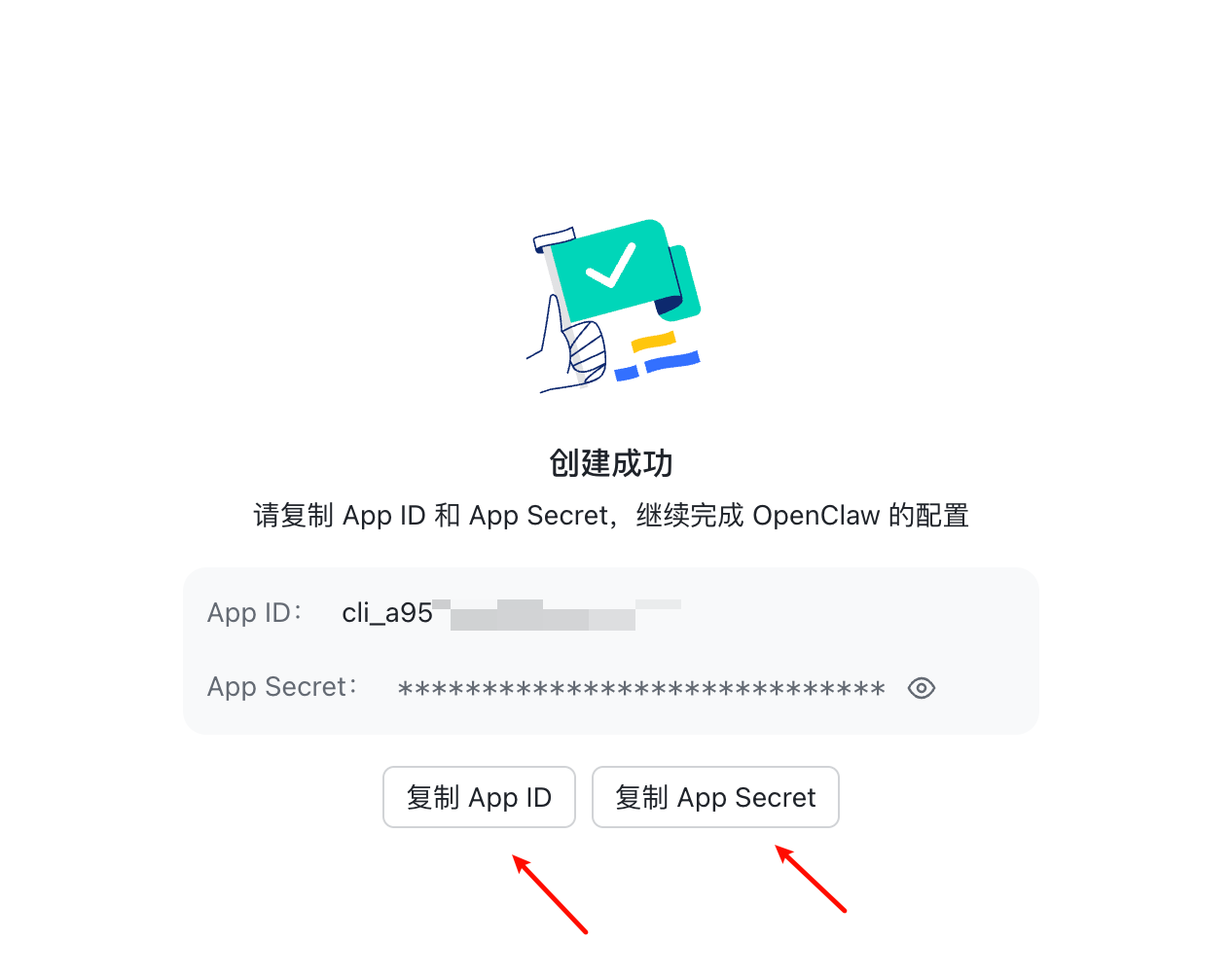
创建成功后把App ID和App Secret留着,下一步要填进桌面端。
配置机器人菜单
这一步可选,但配了之后在飞书里就能点按钮切项目、开新会话,不用手打命令。
进入飞书开放平台,选中刚创建的机器人。

打开「机器人菜单」。

依次添加三个命令,每个都是一样的填法:菜单名称自定,命令填下面的值。
/projects— 列出最近项目并切换/new— 开一条新会话/clear— 清空当前上下文

三个都加完后保存。

菜单只有发布后才生效,点「创建新版本并发布」。

在桌面端填凭据
- 打开「设置」→「IM 接入」,切到「飞书」Tab。
- 把上一步的 App ID 和 App Secret 填进「App ID」和「App Secret」。
- 「Encrypt Key」和「Verification Token」留空即可,模板机器人不需要。
- 需要长时间流式更新同一张卡片时,勾上「流式卡片模式」。
- 点「保存」。

「允许的用户」可以留空。留空时只有完成配对的人能用,这通常就是你想要的。
配对
回到页面顶部的「配对管理」,点「生成配对码」,会出现一枚 6 位码。这一步会立即写入本机配置,不需要再点保存。
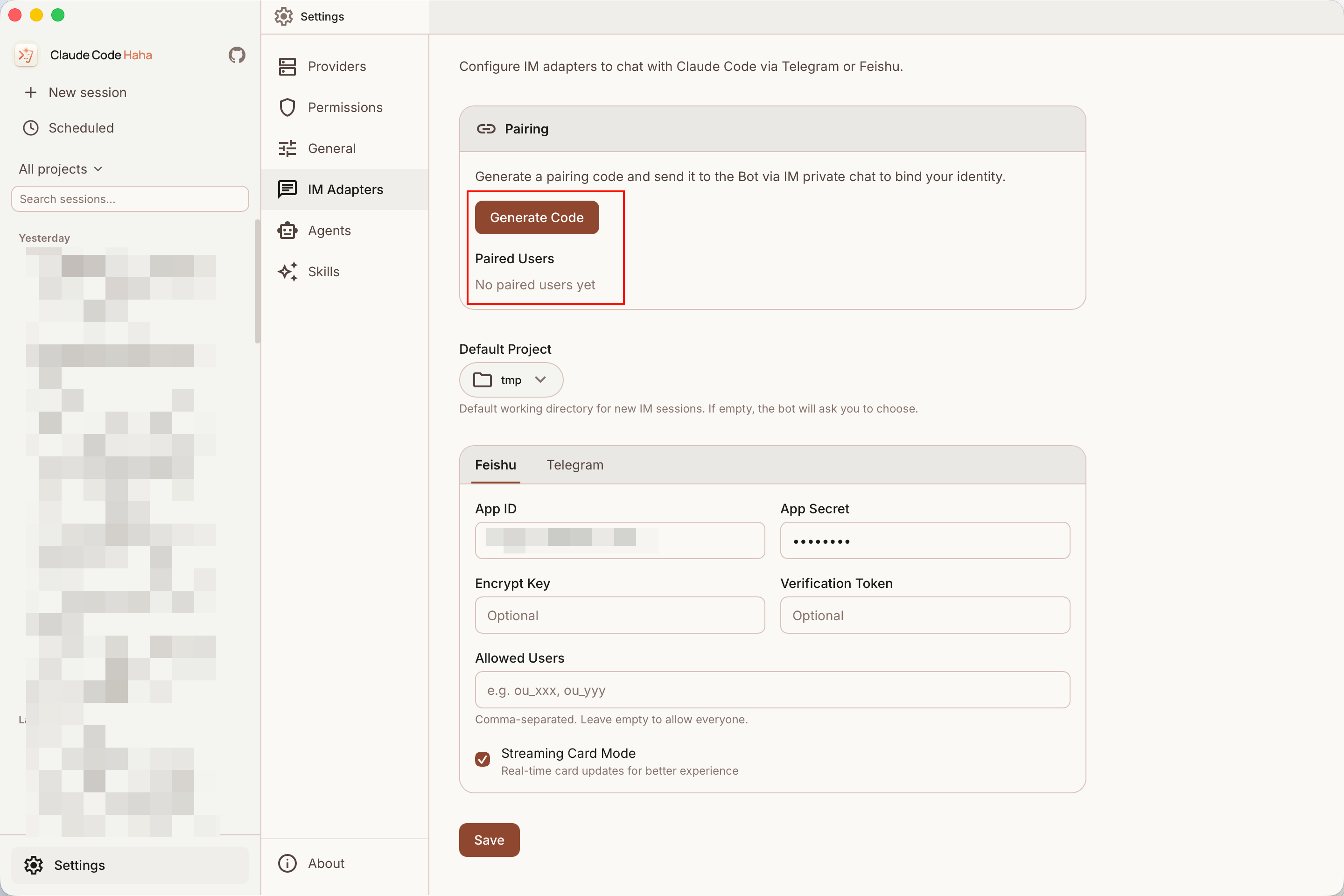
在飞书里私聊刚创建的机器人,随便发一条消息,按提示把这枚码发过去。

看到配对成功提示,就可以直接对话了。

配对码 60 分钟内有效、只能用一次,重新生成后旧码立刻作废。
支持的命令
除菜单按钮外,聊天框里随时可以打:
/help或帮助/status或状态/projects或项目列表/new或新会话/clear或清空/stop或停止
权限审批与消息表现
Claude 请求敏感权限时,飞书里会收到一张交互卡片,点「允许」或「拒绝」,结果直接回传给桌面端会话。
普通回复走飞书的富文本消息,流式内容优先原地更新同一条消息,完成后过长的正文会自动分片发送。
本地开发启动
发布版桌面端会自动把 adapter 作为 sidecar 拉起。只有从源码运行或单独调试时才需要手动启动:
cd adapters
bun install
bun run feishu
可选的环境变量覆盖:
export FEISHU_APP_ID="cli_xxx"
export FEISHU_APP_SECRET="xxx"
export ADAPTER_SERVER_URL="ws://127.0.0.1:3456"
常见问题
收不到消息:确认机器人已发布(改过菜单要重新「创建新版本并发布」),以及聊天窗口是和机器人的单聊而不是群。
权限卡片点了没反应:一般是卡片回调能力没随版本发布,回开放平台重新发一次版本。
一直提示未授权:检查配对码是否还在 60 分钟有效期内、发的是不是当前这一枚(重新生成后旧码失效),以及这个飞书账号是否已经出现在桌面端的「已配对用户」列表里。
重启后会话没接回来:检查 ~/.claude/adapter-sessions.json 能否正常写入,以及桌面端里那条会话是否还在。
源码入口
adapters/feishu/index.ts,以及 adapters/common/ 下的 pairing.ts、session-store.ts、ws-bridge.ts、http-client.ts。